
- Jun 22, 2026
- 3 min read
The Lira at a Historic Low: What to Do With Your Savings in Turkey
The dollar is above ₺46 and the lira has lost about 15% in a year — savings melt even untouched. How to split your money: how much to keep in lira for daily life, what to move into dollars, euros and USDT, and how much to set aside for growth.
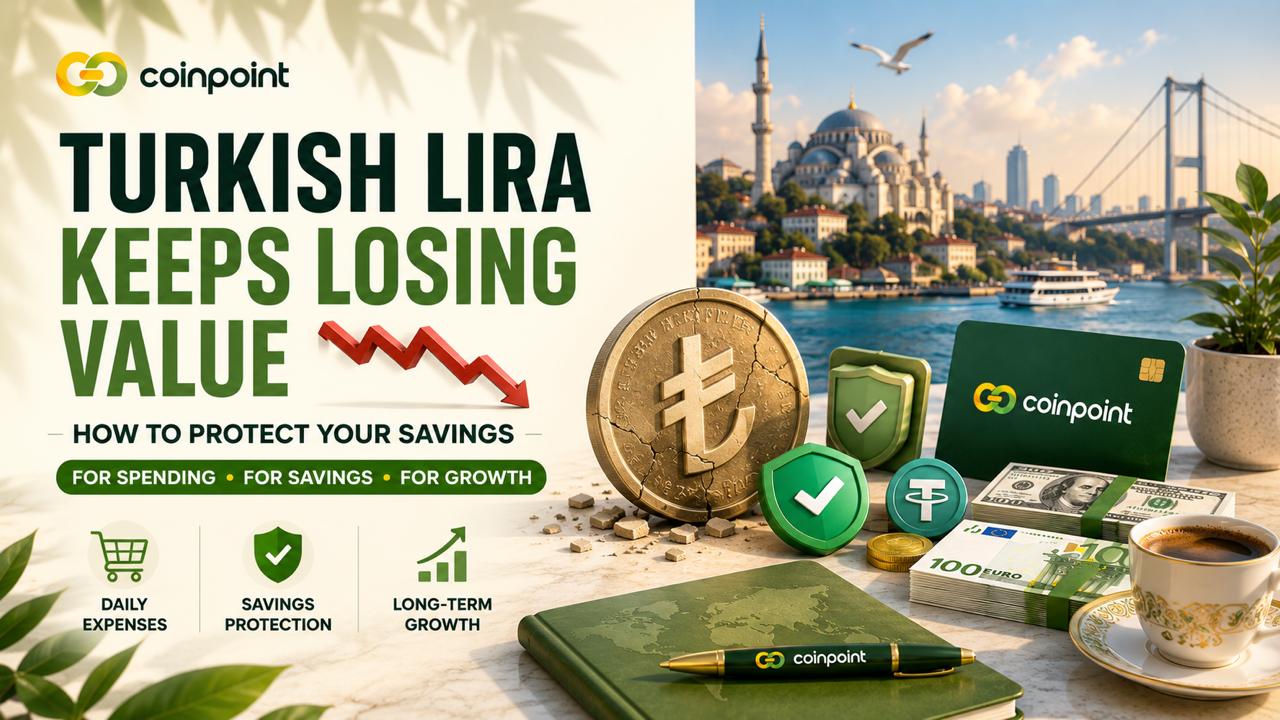
After relocating, money often sits where habit leaves it: your salary arrives and simply stays in the account. In Turkey, that habit has a price. The lira keeps weakening, inflation stays high, and savings lose value on their own — even when you don't touch them. Here's how to allocate your money so it keeps its purchasing power.
The lira is at a historic low again
The dollar has hit a new record against the lira — above ₺46 per dollar. A year ago a dollar bought around ₺39–40, which means the lira has lost roughly 15% against the dollar over that period.
In practice it looks like this: every $1,000 that sat in lira for a year is now worth about $850 in purchasing power. Around $150 out of every thousand simply dissolved — without you spending a cent.
Why lira savings melt even when you leave them alone
While the money sits in your account, it seems like nothing is happening: the lira figure is the same. But the purchasing power of those liras falls along with the exchange rate — over time, the same amount buys you less. High inflation amplifies the effect.
Hence a simple principle: the lira is convenient for everyday spending, while savings are better kept in more stable assets. Here's how to do that, step by step.
Step 1. Work out how much to keep in lira
First, add up how much you spend in lira each month. This includes everything you pay for locally:
- rent;
- groceries;
- transport;
- mobile and internet;
- cafés and small purchases;
- a small buffer for the unexpected.
Keep that amount in lira. This is your living money: it gets spent over the month anyway, so exchange-rate swings barely affect it. For example, if you spend around ₺40,000 a month, it makes sense to keep roughly that amount in lira plus a small buffer — and move everything above it into more stable assets.
Step 2. Preserve what's left over
Everything that remains after expenses, keep in assets that don't melt with the lira:
- US dollar (USD);
- euro (EUR);
- USDT.
These hold their purchasing power while the lira weakens. One more point: if your income is already in foreign currency, all the more reason not to convert everything into lira automatically — change only as much as you need for current spending.
Step 3. If you want to grow it
If you can, set aside a portion for growth. This is separate money and a question of your personal attitude to risk — there's no universal answer here.
Bitcoin has historically risen over the long run, though it goes through sharp drawdowns: it can lose tens of percent in a matter of weeks. So it makes sense to allocate only the amounts you're prepared to leave untouched for a long time and ride out the swings.
Where to exchange your lira
In short, the whole logic comes down to three points: keep lira for near-term spending, the rest in stable assets, and a separate amount for growth at your discretion.
You can exchange lira for dollars, euros, or USDT (or buy crypto for growth) at CoinPoint — at our offices in Antalya and Istanbul, without hunting for P2P sellers or meeting strangers.
Check the current rate or calculate an exchange for your amount in the bot: @coinpoin_bot.
Offices:
- Antalya — MarkAntalya and Lara;
- Istanbul — Fatih.
Full addresses — offices on the website.
This material is for informational purposes and is not individual investment advice. How to allocate your money is your decision.